
Tell NY Dispatch: The Devil Still Reads a Magazine
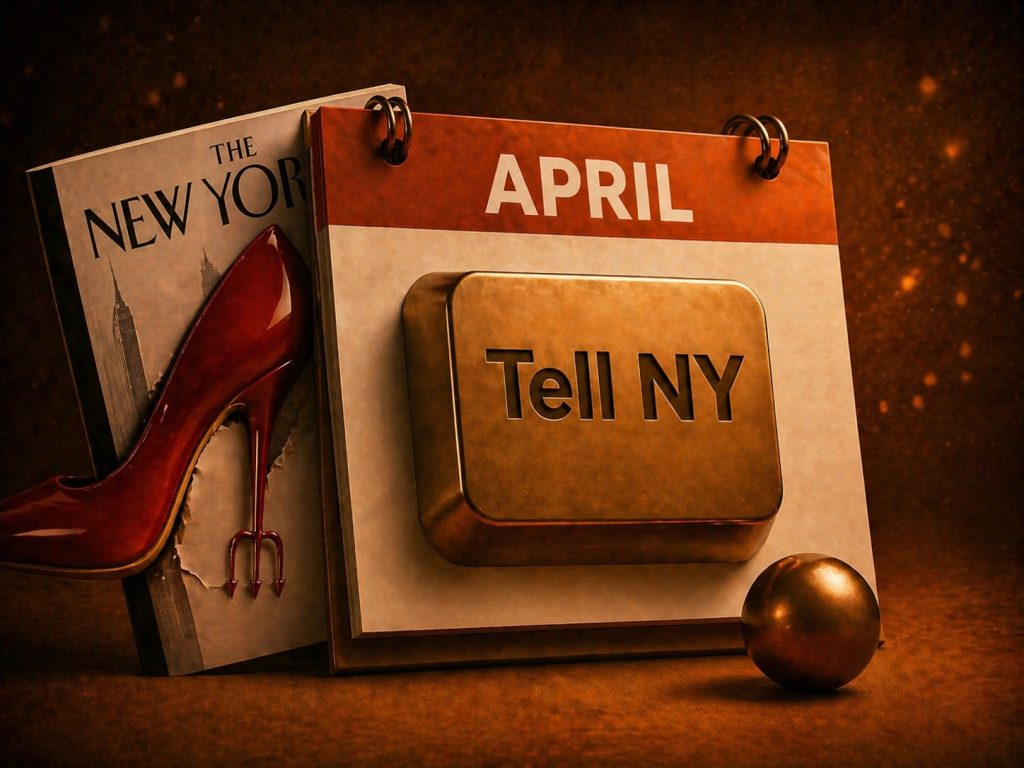
Hello, and welcome to the April edition of the Tell NY Dispatch! This time, we’re diving into what might just be the article of the year (although we remind ourselves it is still just April), how to break into the news cycle and what everyone pretends to like - conferences. Buckle up.
If You Read One Thing
What hasn’t already been said about that New Yorker piece? (maybe that there’s an em-dash in the headline that makes us suspicious.) The day it came out, our team group chat was buzzing with nonstop messages about what we love, and what felt different.
Even though we live in a media environment built for speed, with outlets shifting toward shorter, more direct formats, there’s something about magazine writing that still manages to move the needle in a really fascinating way.
To point to a few recent examples, think about the Time magazine covers during last year’s U.S. elections, or the “It Must Be Nice to Be in the West Village” New York magazine essay that took over Gen Z and somehow broke TikTok. There’s something almost ironic (and kind of great) about influencers dissecting a piece of journalism like its cultural content. And now, search “Sam Altman,” and Google will auto-suggest “New Yorker.”
That’s an amazing achievement for journalism! So we started thinking about what makes it work.
Part of it is Ronan Farrow’s writing, which is almost literary. One moment that stuck with me was a small detail about a system in Uber’s offices (where a part of the interview took place) that used to listen to employees and occasionally jump into conversations, until they had to shut it down. It reads almost casually, like a throwaway anecdote.
What it actually does is plant something deeper. Without saying it directly, it taps into a much bigger idea about the future of technology and AI, how present it already is, how quietly it integrates into everyday life, and how uncomfortable that can be. It adds another layer to the story without stopping the narrative to explain it.
To us, this piece is a masterclass in writing. And the reason this kind of writing still works so well is because it creates that rare “a-ha” moment that readers enjoy so much when they consume news.
So here’s to a great month for journalism, and hopefully many more inspiring pieces like this one.
👉 Read the full article here: Sam Altman May Control Our Future—Can He Be Trusted?
How to Create “Buzz” Before You Even Exist
This month, an eleven-week-old company landed coverage in Bloomberg and The Information, managing to insert itself into one of the biggest conversations in tech: AI agents and autonomous hacking.
In recent weeks, we’ve been working with Buzz, a company we believe is going to make some serious noise, and secured top-tier coverage before they even launched publicly. How did this come together? Let’s break it down.
At a moment where the industry was flooded with discussions about the risks and limitations of AI agents, Buzz came in with a provocative question: If this kind of capability is supposedly restricted, how were we able to do it with existing tools?
The reason it worked was, first and foremost, a really good story – with the receipts to back it up. What Buzz did was build a pretty simple proof of concept: an AI agent that scans for vulnerabilities and exploits them using existing tools. By doing so, they created a live demonstration tied to an active industry debate.
On top of that, Buzz made it slightly uncomfortable. At a time when everyone is questioning how far AI can go, they put it into practice and showed that what people are talking about is already happening. The idea that this is already possible is what made people – and the media – pay closer attention.
3 key takeaways:
- Show, don’t tell – everyone is trying to join the conversation, and anyone can comment on a trend. If you can demonstrate something real, you are turning yourself from yet another voice in the discussion to the conversation itself.
- You don’t (always) need a finished product to blend into the conversation – some times, what you do need is just something concrete. A demo, an experiment, a point of view backed by action.
- Catch the moment – timing often matters as much as substance. Instead of waiting for the “perfect” launch, look at what people are already talking about and find a real way to plug into it.
Bottom line
It’s subjective, but not all companies need to wait until they’re “ready” to do PR. We usually tell companies to go out when they have something to say, and that still holds. The point is that “something to say” doesn’t have to be a launch, funding, or a finished product. The case with Buzz shows that if you have a real insight, backed by something concrete and timed to the right conversation, you can create relevance much earlier.
👉 Read more about Buzz in The Information (not once, but twice!) and Bloomberg
IRL: A few takeaways from HumanX
HumanX has managed, in just a couple of years, to build a truly significant gathering that brings together some of the biggest companies and names in the industry – as well as one of the most well-attended events from a media perspective. When you have this many players in one place, it becomes a great opportunity to step back, see where the industry is heading, and just as importantly, rethink what companies can bring to the table at conferences.
We spent the time listening closely, paying attention to what resonates, and learning from some incredible speakers. A few things did stand out:
- Everyone is trying to get your attention – but almost no one succeeds: At the entrance alone, you see branded cars, giveaways, and signage everywhere. It’s a lot of creativity and effort, but it can also blend together. When so much is happening at once, it’s not always easy to focus on any one thing. Our takeaway: either don’t do anything, or do something truly unignorable. Everything in the middle just disappears and ends up being a waste of budget.
- Side events are where the real action happens: Inside the conference, between panels and meetings, people are constantly rushing to the next thing or catching up on emails. We find that some of the most meaningful conversations happen around the conference. They’d never happen without the conference as an anchor, but side events create space to connect, learn about best practices, and have real conversations. It’s the one moment where people slow down, grab a drink, and are open to engaging. And honestly, it’s just a much better environment to connect. With that in mind, a successful side event has to be carefully curated – a clear, targeted audience, strong content (not fluff), and something that gives people a reason to show up. When it’s done right, it becomes one of the most valuable touchpoints around the event.
HumanX was a great reminder of something we already believe in. Even when there’s a clear playbook for how to show up at conferences, the real impact comes from knowing where not to follow it too closely, and just as importantly, it reinforced the value of face-to-face.
Same time next year… or see you in October in Amsterdam?